CASE STUDY

Student Loan Discharge Through Bankruptcy
Middle District of Florida – Tampa Division
Decision Issued: January 7, 2026
Overview
This case study highlights the successful discharge of student loan debt through bankruptcy under the undue hardship standard, as evaluated by the United States Bankruptcy Court for the Middle District of Florida, Tampa Division.
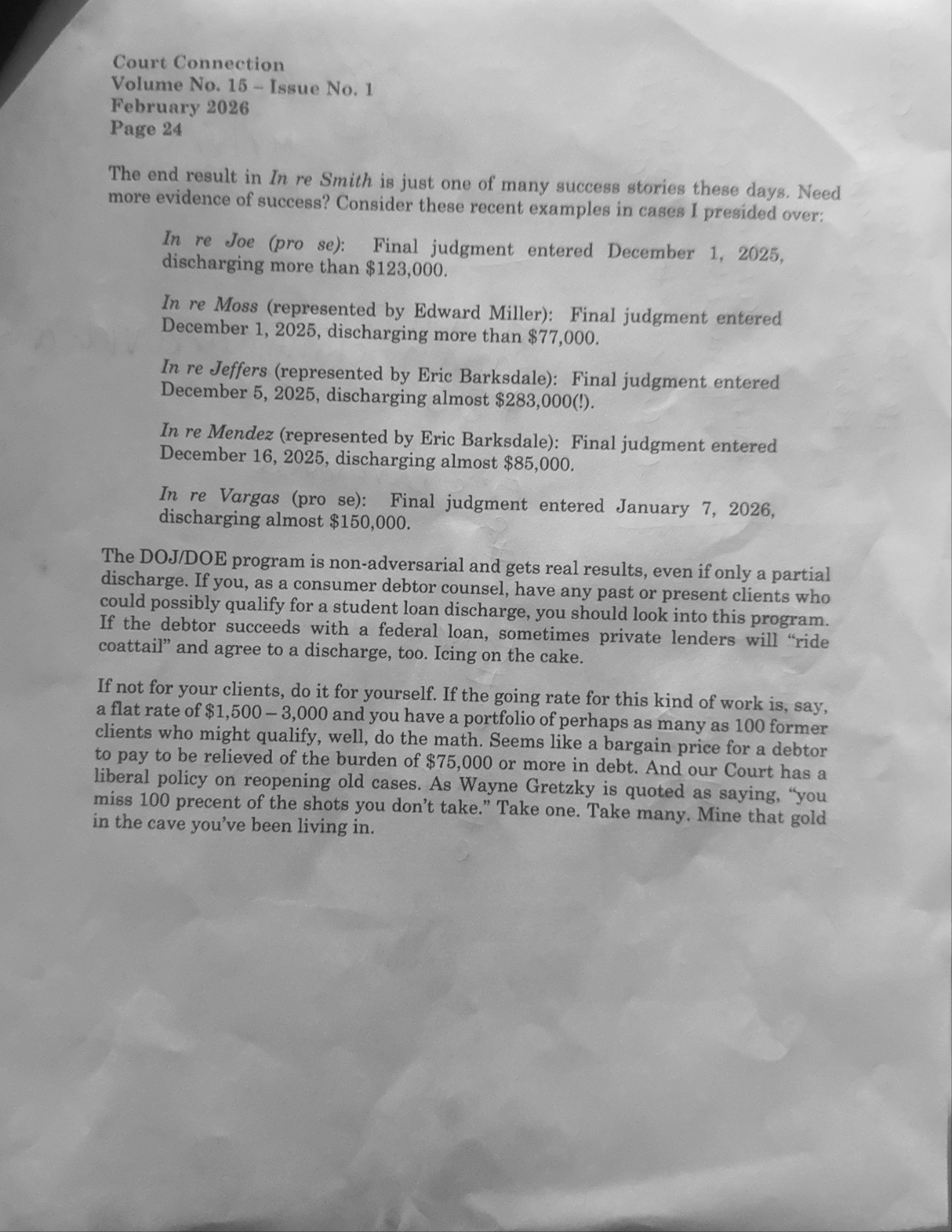
On January 7, 2026, the Court entered a decision granting a full discharge of student loan obligations for Jena Hartman (formerly Vargas) following an adversary proceeding within a Chapter 7 bankruptcy case.
The total student loan debt discharged exceeded $150,000.
Background
Like many borrowers across the United States, Jena carried significant student loan debt for several years. During this time, she navigated financial hardship while balancing family responsibilities and long-term financial constraints.
As financial pressures continued, she began researching potential legal options available under federal bankruptcy law. During this process, she became aware of the “undue hardship” standard, a legal framework that allows for the discharge of student loan debt in limited circumstances.
Legal Process
Student loan discharge in bankruptcy requires the filing of a separate lawsuit within the bankruptcy case, known as an adversary proceeding.
In this case, the Court evaluated whether repayment of the student loans would impose an undue hardship based on factors commonly considered in such proceedings, which may include:
• current income and necessary living expenses
• dependents and household responsibilities
• health considerations
• long-term financial outlook and earning capacity
• good-faith efforts to repay the loans
The process required the organization of detailed financial records, documentation, and evidentiary materials to support the claim.
Court Outcome
After reviewing the evidence and legal arguments presented, the Court determined that repayment of the student loan obligations would constitute an undue hardship under applicable legal standards.
As a result, the Court granted a full discharge of the student loan debt, relieving the borrower of the obligation to repay more than $150,000 in student loans.
Key Takeaways
This case demonstrates several important points about student loan discharge in bankruptcy:
• Student loans are not automatically nondischargeable in all cases
• Relief may be available where repayment creates undue hardship
• Each case is highly fact-specific and depends on individual circumstances
• The process requires formal legal proceedings and supporting documentation
Educational Purpose
This case study is provided for educational and informational purposes only. It is not intended as legal advice.
Outcomes in student loan discharge cases vary significantly based on individual facts, applicable law, and court evaluation.
Individuals considering bankruptcy or student loan discharge should consult with a qualified bankruptcy attorney to evaluate their specific situation.
About Student Loan Hardship Navigator
Following this experience, Jena Hartman created Student Loan Hardship Navigator, an educational platform designed to help borrowers better understand the student loan hardship discharge process and the types of documentation courts may consider.
Student Loan Hardship Navigator is an educational platform designed to help borrowers better understand the student loan hardship discharge process.
We provide general information about how bankruptcy courts evaluate “undue hardship” and the types of documentation that may be considered in these cases.
We do not provide legal advice or represent individuals in legal proceedings.
Every borrower’s situation is unique, and outcomes vary based on individual facts, applicable law, and court evaluation.
We encourage individuals to consult with a qualified bankruptcy attorney to evaluate their specific circumstances.
Our goal is simple:
To help borrowers become more informed, more prepared, and more confident when exploring their options.